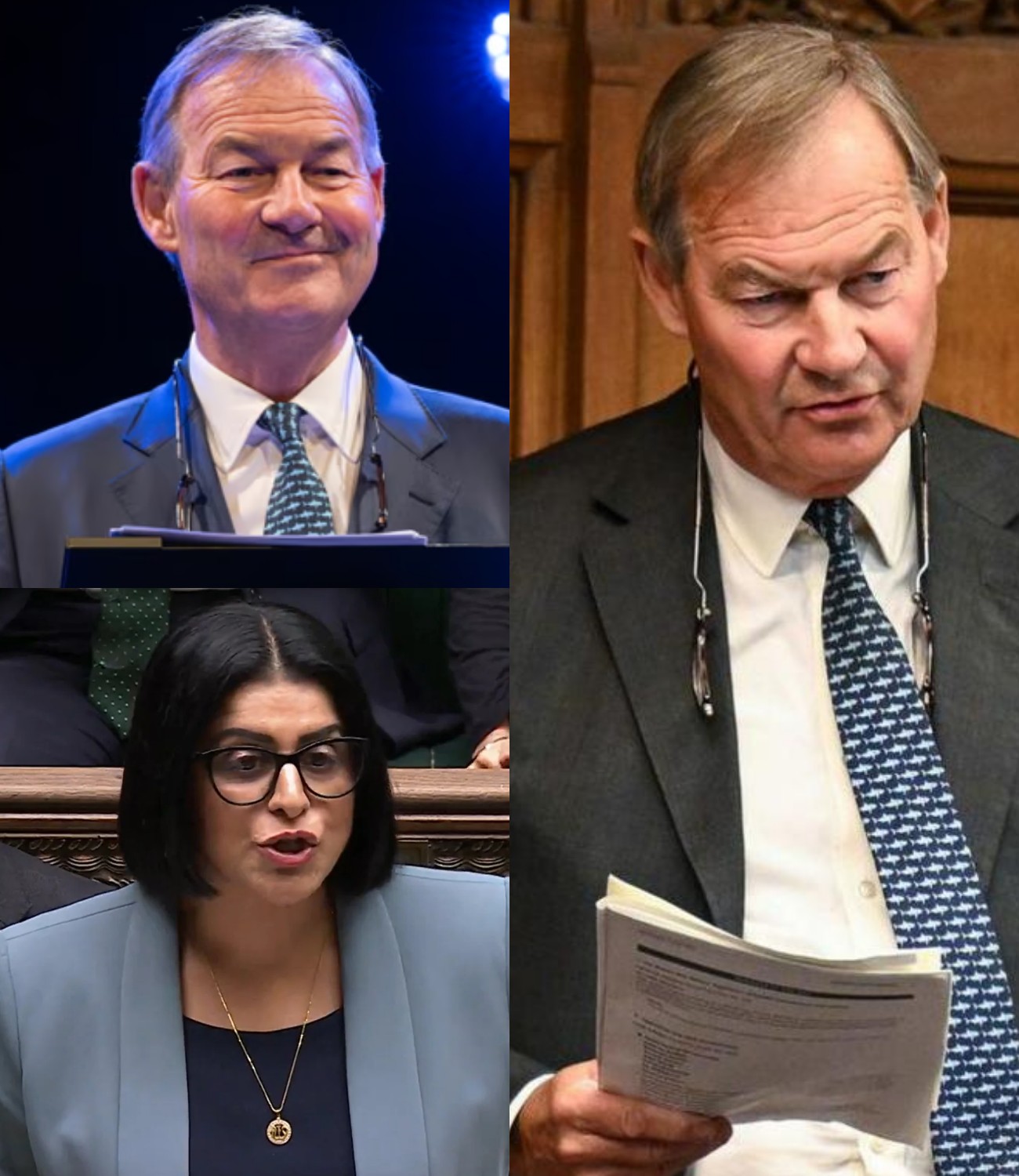
The British Parliament witnessed a scene of absolute chaos today as Reform MP Rupert Lowe unleashed a savage takedown against the government regarding the ongoing grooming gang scandal.
Lowe confronted several Labour MPs over the systemic abuse and trafficking of British girls by predominantly Pakistani Muslim grooming gangs, exposing what he called decades of state-sponsored cowardice.

The Great Yarmouth MP hammered home the horror of a privately funded inquiry that has recently uncovered thousands of victims who were allegedly trafficked overseas for sexual exploitation.
Lowe accused law enforcement and local councils of deliberately turning a blind eye to these unimaginable crimes to avoid sparking what they termed as “dangerous community tensions” in Britain.
The Commons Meltdown: A Labour MP Crumbles Under Pressure

The atmosphere turned electric as a prominent Labour MP appeared to totally crumble under the pressure of Lowe’s relentless questioning and his presentation of specific and brutal evidence.
The MP stammered through several weak deflections but ultimately provided no real answers, causing the entire chamber to gasp in disbelief at the sheer scale of the denial.
This is no longer viewed as an isolated local scandal, but rather as a catastrophic state failure riddled with deep-seated cover-ups and a sense of bureaucratic betrayal today.
Lowe demanded immediate justice for the victims, shouting across the floor: “How many more young girls must suffer while you hide behind your political correctness and your excuses?”
The Private Inquiry: Uncovering the Scale of the Evil
The privately crowdfunded inquiry cited by Rupert Lowe has reportedly found evidence of victims being transported to Pakistan and other locations where they were lost to the system.
During the debate, Lowe shared a testimony from one survivor who claimed to have been raped by over six hundred men, highlighting the relentless nature of this specific evil.
He argued that the British people are furious because the truth is finally being exposed despite the best efforts of the political class to keep it buried forever.
The grooming crisis is undeniably real, and Lowe insisted that the complicity of the authorities is now impossible to ignore as the evidence continues to mount every day.
A Reckoning for the British Establishment
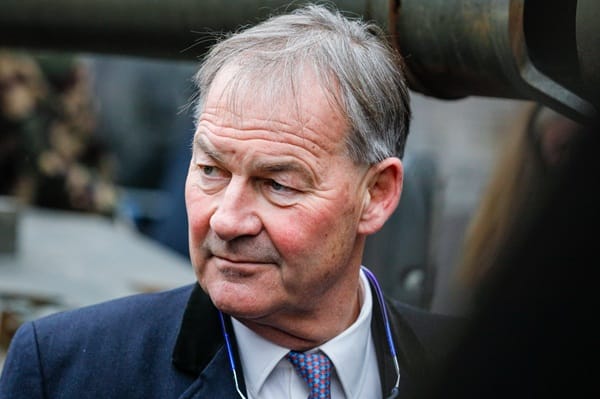
The silence from the Labour benches during the most intense parts of the confrontation was described as “damning” by onlookers who witnessed the historic and emotional parliamentary session.
Rupert Lowe has pledged to pursue private prosecutions against the officials who failed to protect these children, promising a reckoning that will shake the foundations of the British state.
The viral clips of the “Commons Meltdown” have already reached millions of people on social media, sparking a massive wave of public indignation and calls for a.
Many citizens are now sharing their own stories of being ignored by the police, creating a powerful momentum for a national inquiry that focuses specifically on the ethnic component.
The Global Impact: Is Britain Finally Waking Up?

International observers are watching the situation closely, as the debate in Westminster reflects a broader struggle across Europe regarding the consequences of unchecked migration and failed social integration.
Lowe’s “uncompromising” stance has made him a hero to many who feel that the mainstream media has intentionally suppressed the truth about the grooming gang phenomenon for decades.
The Labour government finds itself in an impossible position, forced to defend a system that has clearly failed the most vulnerable members of society for a very long.
As more details from the private inquiry are released, the pressure on the Home Office to launch a full-scale state investigation into trafficking cases will become absolutely.
Conclusion: Justice Delayed is Justice Denied

In conclusion, Rupert Lowe’s challenge in the House of Commons has exposed a wound in British society that will not heal until the full truth is acknowledged and addressed.
The meltdown of the Labour MP serves as a stark reminder that the old tactics of deflection and denial are no longer effective in the face of hard facts.
The victims deserve more than just words; they deserve a government that is willing to name the perpetrators and dismantle the networks that have destroyed so many young lives.
Britain is indeed furious, and the “reckoning” promised by Lowe may be the only way to restore faith in a justice system that has been broken for too.
Share this article to support the call for transparency and to ensure that the voices of the thousands of grooming gang victims are finally heard by the entire world.

The fight for justice is far from over, but today a significant blow was struck against the wall of silence that has protected the guilty for far too many.
Stay tuned for more updates as we follow the private inquiry’s findings and the government’s increasingly desperate attempts to manage the fallout from this explosive and heartbreaking national.
The truth will always prevail, and today Rupert Lowe made sure that the truth was shouted from the highest rafters of the British Parliament for all to hear and.
If Colbert Can Fall This Fast, None of Us Are Safe: Inside the Machine That Decides Who Gets Erased-phuongchi

The first time you witness a public cancellation up close, it does not resemble justice or accountability, but something mechanical, sudden, and indifferent, like a trapdoor releasing without warning beneath someone’s carefully built life.
I have worked inside those rooms, watched the process unfold from the inside, and learned how quickly a respected voice can be reframed into a disposable headline.

I watched Stephen Colbert work for years, balancing humor, pressure, and cultural volatility with a precision that most viewers never fully appreciate.
Late night comedy looks effortless on television, yet behind the scenes it is a relentless calibration of timing, tone, and survival in a media ecosystem that changes rules without notice.
Every joke is weighed against invisible tripwires, shifting public moods, and the knowledge that context rarely survives its first encounter with the internet.
What feels shocking now is not that Colbert faces backlash, but how quickly admiration can mutate into condemnation once momentum decides direction.
One clip becomes detached from its origin, one headline frames intent, and suddenly decades of work are reduced to a single narrative chosen by strangers.

This is not accountability as most people understand it, because accountability implies process, proportion, and the possibility of explanation or repair.
What we are witnessing instead is velocity, where speed replaces judgment and amplification substitutes for understanding.
I have seen writers, producers, and hosts live under the constant awareness that the same instincts praised today could be weaponized tomorrow.
Comedy, once understood as exaggeration and critique, now exists inside a battlefield where interpretation depends entirely on who shares the clip first.
The machine does not care about nuance, intent, or history, because those slow down engagement and dilute outrage.
It only cares about traction, reaction, and the emotional charge that keeps users scrolling and platforms profitable.
Colbert’s situation resonates precisely because he represents safety in the public imagination, an established figure assumed to be insulated from sudden collapse.
If someone with his platform, network backing, and cultural familiarity can be dragged to the edge overnight, protection begins to feel like an illusion.
That illusion matters, because many people still believe cancellation happens only to those who deserve it.
The uncomfortable truth is that deserving rarely enters the equation once the machine accelerates.
Context becomes optional, apology becomes irrelevant, and clarification often functions as gasoline rather than relief.
I have watched colleagues scramble to explain jokes that were understood perfectly well the night before.
What changed was not the material, but the audience interpreting it through a newly hostile lens.

One day a comedian is celebrated for bravery, the next condemned for recklessness, using the same voice and instincts.
The shift feels arbitrary because it is driven less by values than by momentum.
The crowd does not agree on rules anymore, yet it enforces punishment with astonishing confidence.
Everyone participates because participation feels safer than hesitation.
Silence can be interpreted as complicity, while disagreement risks making you the next target.
This dynamic creates an environment where fear masquerades as morality and speed substitutes for thought.
What makes Colbert’s case especially unsettling is how quickly humanity disappears from the conversation.
A person becomes a symbol, a stand-in for broader resentment, anger, or exhaustion.
Once reduced to that symbol, complexity becomes inconvenient.
People forget that jokes are written by teams, shaped by deadlines, and delivered inside formats designed for exaggeration.
They forget that humor has always involved risk, misfire, and occasional discomfort.
The machine does not forget, however, how to monetize outrage.
Every reaction, whether supportive or hostile, feeds the same algorithmic appetite.
This is why cancellations often feel inevitable once they begin, regardless of facts introduced later.
Correction arrives slower than accusation, and slowness is fatal online.
I have seen how producers debate whether to address backlash or wait for the cycle to move on.
Neither option feels safe, because attention itself has become the punishment.

Colbert’s experience forces an uncomfortable question onto anyone who creates, comments, or even shares content.
If the rules are unknowable and enforcement instantaneous, how does anyone speak honestly without calculating survival?
Some argue this is simply the cost of influence, that powerful voices should expect scrutiny.
Scrutiny, however, is not the same as erasure.
Critique implies engagement, while cancellation often implies removal from humanity altogether.
The machine collapses those distinctions because outrage travels better than analysis.
I have watched young writers internalize this lesson early, learning to self-censor not from ethics, but from fear.
Fear narrows creativity, flattens voices, and rewards conformity disguised as safety.
Ironically, this environment produces blander content while pretending to demand accountability.
Colbert’s long career makes this tension visible because his work spans eras with radically different tolerance for ambiguity.
What was once understood as satire is now parsed as ideological evidence.
Every joke becomes a test, every laugh a declaration of allegiance.

That transformation changes not just comedy, but public discourse itself.
When humor becomes a loyalty signal, its power to question authority diminishes.
The machine thrives on division because division produces engagement.
It does not distinguish between justice and spectacle, only between trending and ignored.
Watching Colbert’s situation unfold, I recognize the same pattern I have seen repeatedly.
First comes selective framing, then moral escalation, then the demand for consequences unbound by proportion.
At that point, outcomes matter less than participation.
People join because opting out feels like risk.
This is why the question “who is safe” matters so deeply right now.

Safety used to come from consistency, reputation, and demonstrated intent.
Now it feels temporary, granted by momentum rather than merit.
Anyone with a platform exists on borrowed time, dependent on a crowd that may turn without warning.
The scariest part is not that Colbert may weather this storm.
The scariest part is what the storm teaches everyone watching.
It teaches that decades of work can be outweighed by minutes of outrage.
It teaches that explanation is less valuable than silence, and silence less valuable than disappearance.
It teaches that humanity is negotiable once virality enters the room.
This should concern more than entertainers, because the same mechanism governs politics, workplaces, and private lives online.
The boundary between public and personal collapse grows thinner every year.
Colbert’s visibility simply makes the process easier to observe.
If someone like him can be reduced so quickly, others will learn to speak less, not better.
They will learn to avoid risk, not to refine judgment.
That is not accountability.
That is fear masquerading as virtue.
We should be asking whether this system improves discourse or merely satisfies momentary outrage.
We should be asking who benefits from cycles that destroy faster than they understand.
Most importantly, we should be asking what happens when the machine runs out of celebrities and turns inward.
Because if someone as familiar and established as Colbert can be pushed to the edge overnight, the answer is clear.
None of us are as safe as we think.